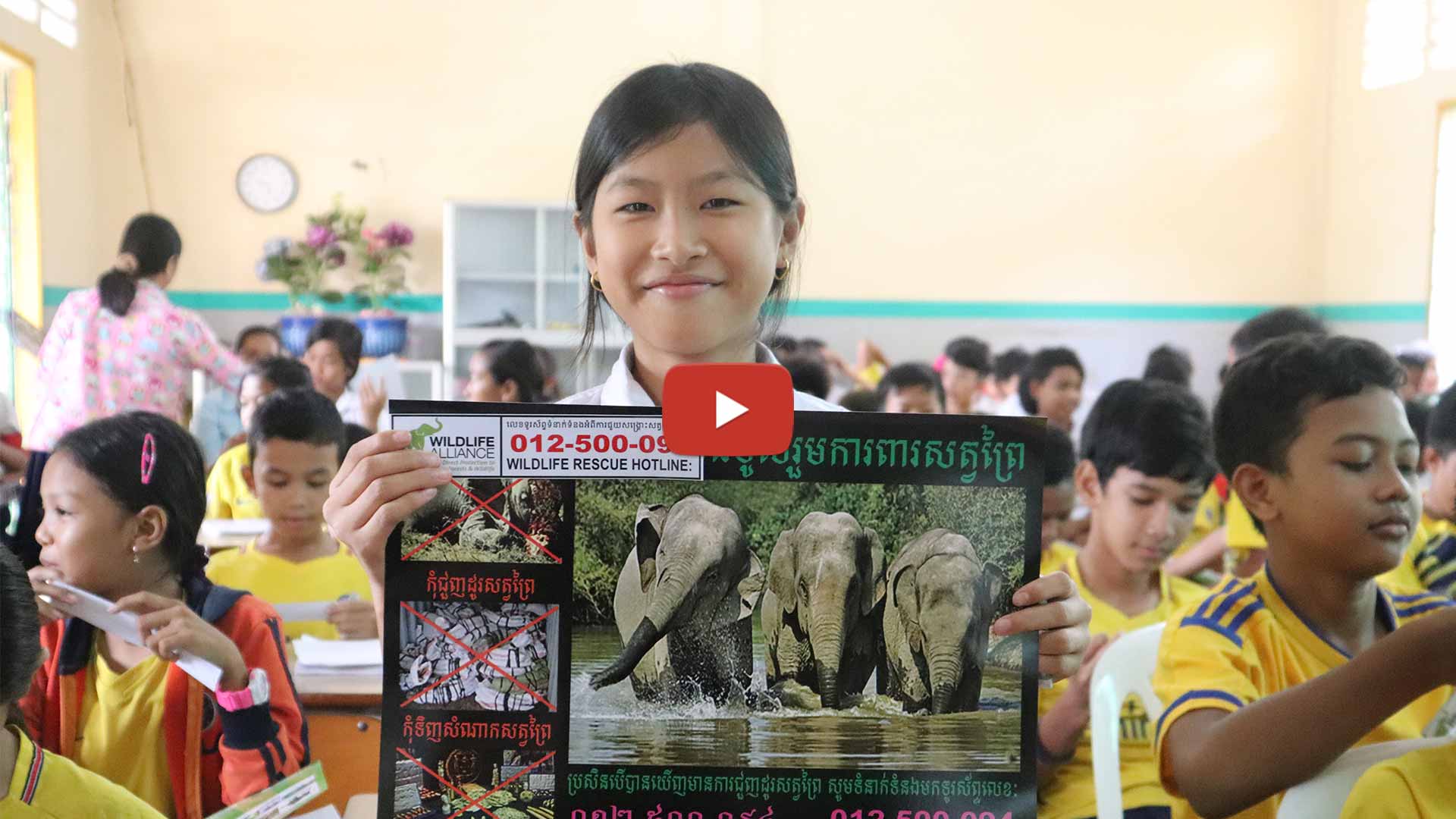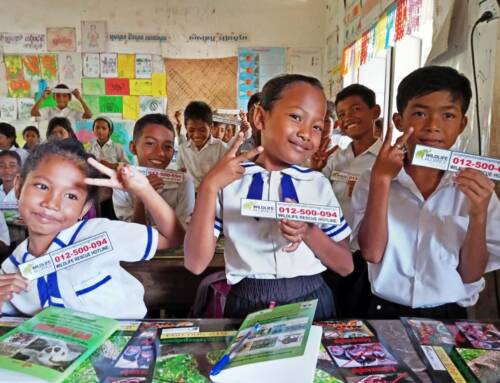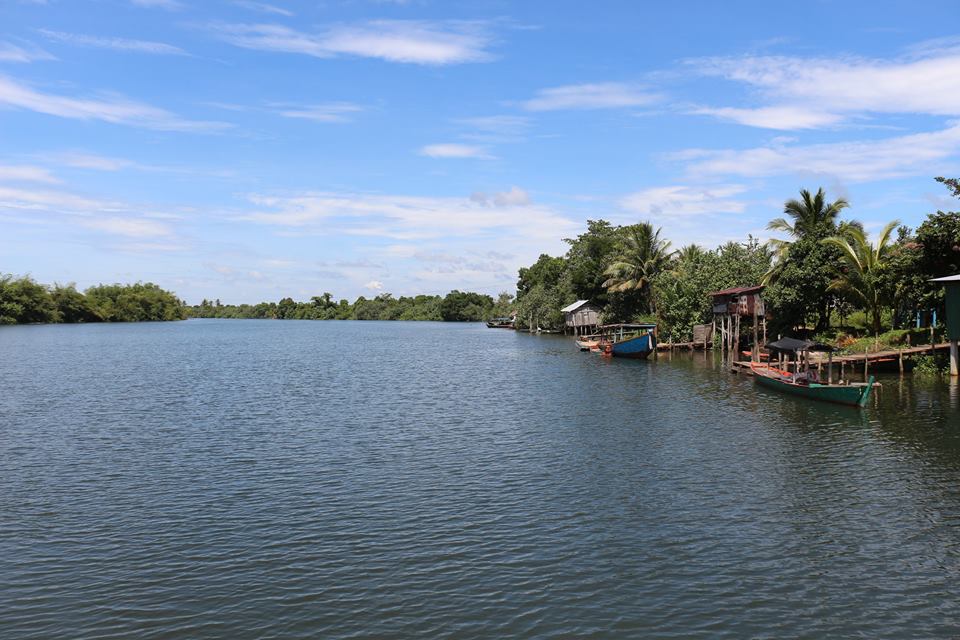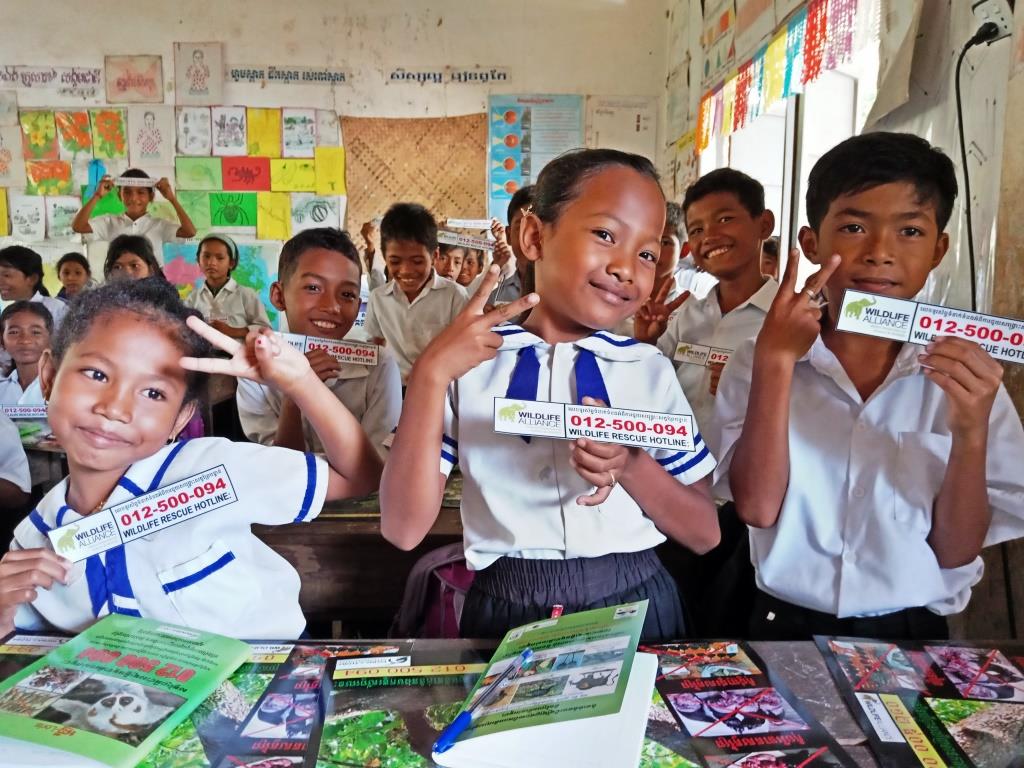
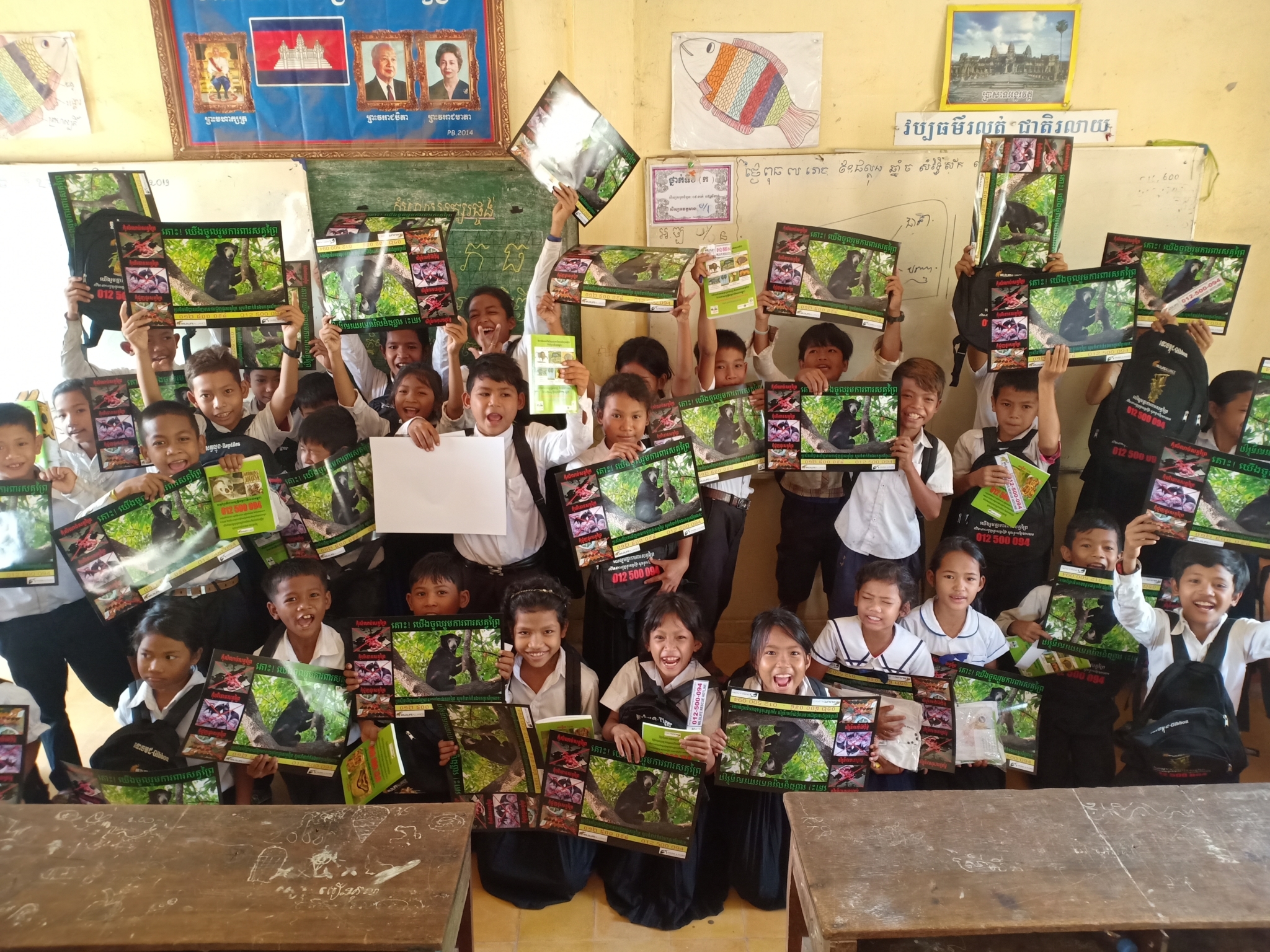
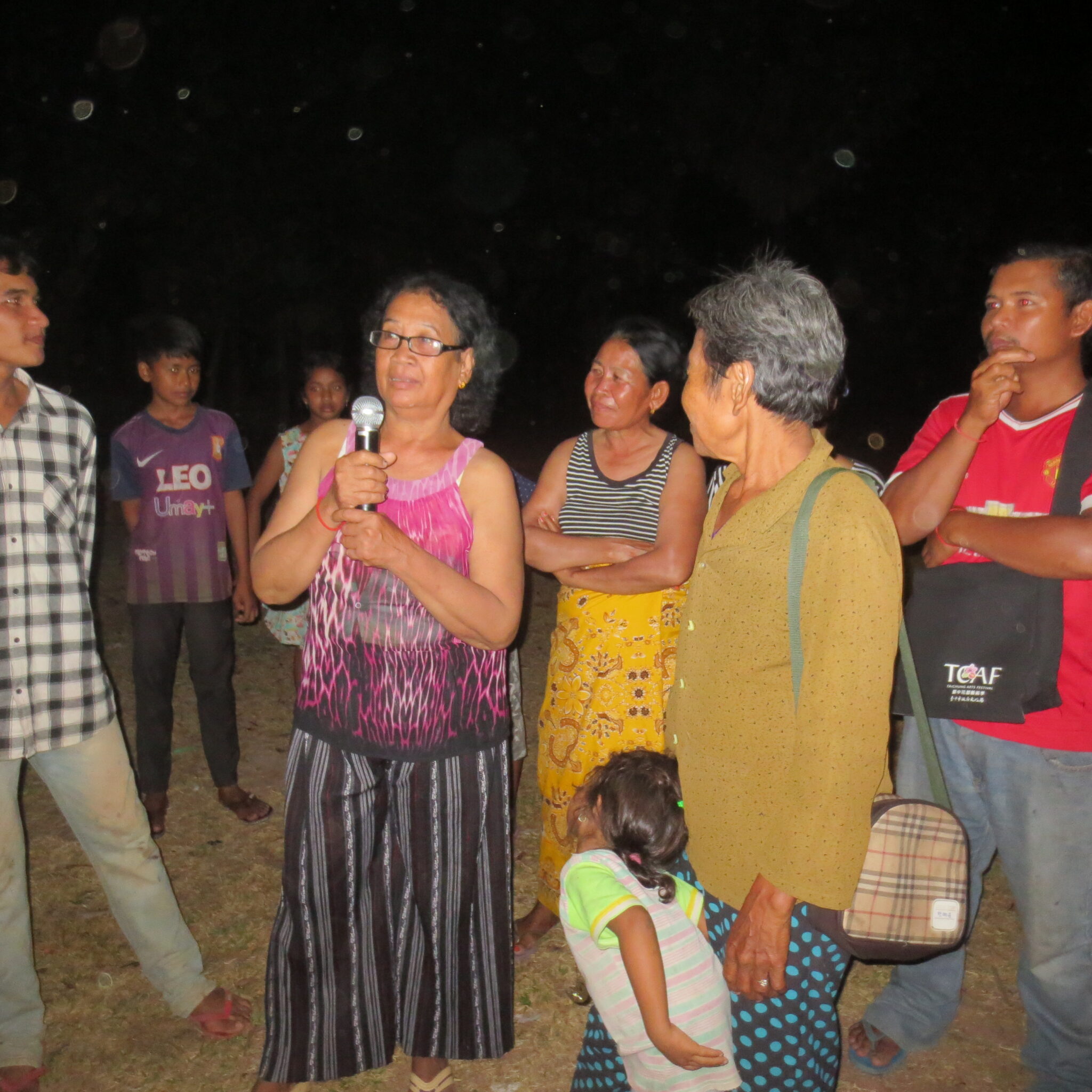
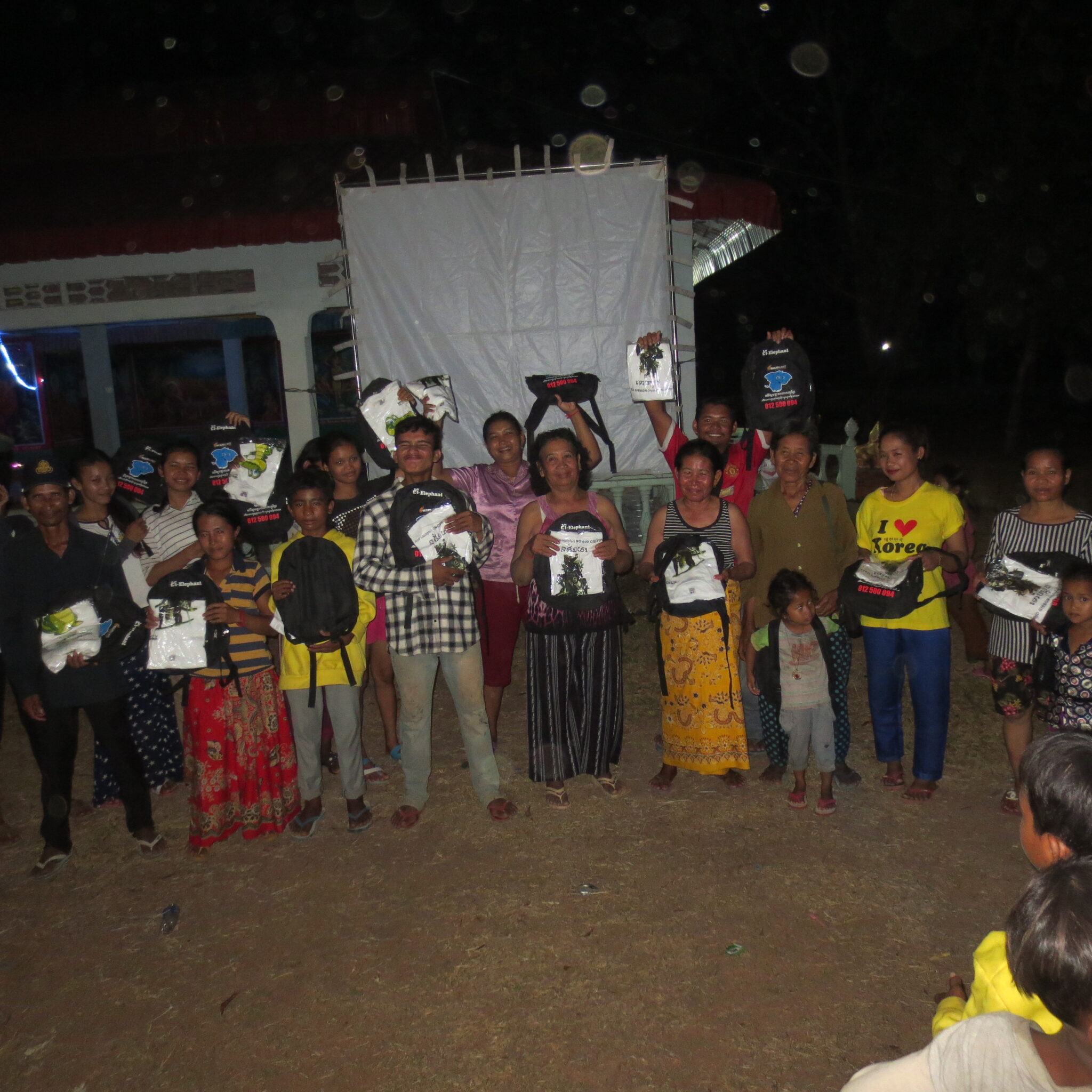
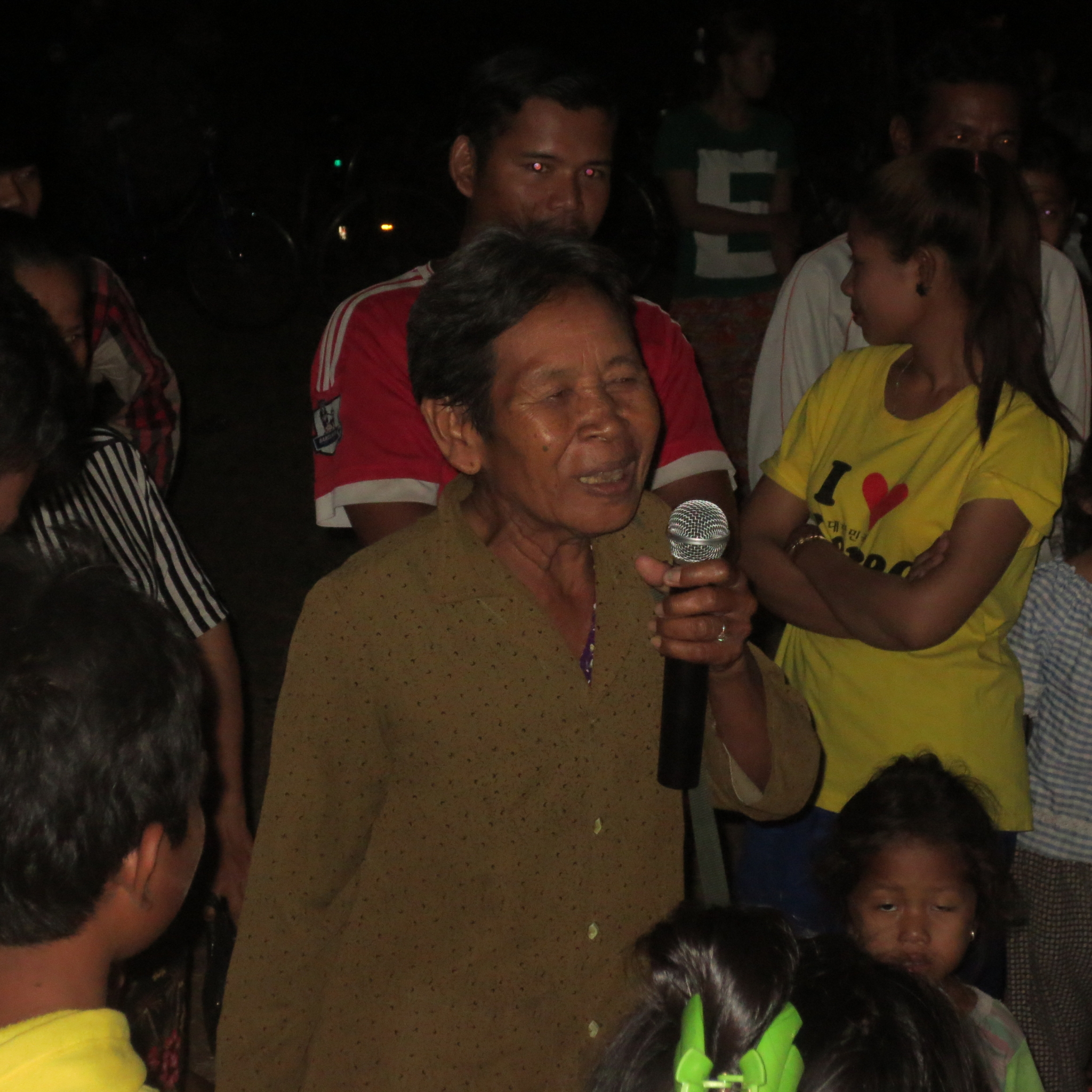
One of the key pillars to reducing demand for wildlife for meat and medicine is raising awareness of its dangers, with intervention especially needed in hot spots of the wildlife trade. On March 27, the Kouprey Express (KE), Wildlife Alliance’s mobile environmental education team, gave classroom lessons to 35 students at Preah Kosamak Sihanok Primary School and held a Community Night Show in O’sandanchas village in Kampong Chhnang province. The KE is intervening in this area and surrounding villages because the region is rife with wildlife poaching and wildlife products are openly sold on the market. The KE’s community event attracted 100 villagers for a night of educational entertainment. The team addressed the inherent and financial benefits of protecting Cambodia’s natural heritage and protecting its wildlife. Some villagers raised concerns since they make money by exploiting wildlife, however, Ms. Yi, an audience member of about 60 years of age, stood up to address her community and urged them not to hunt, eat, or traffic wildlife and to urged them to report any illegal wildlife trafficking to Wildlife Alliance’s Wildlife Rescue Hotline (012 500 094).
March 2019 Summary of Activities
- Raised awareness on habitat and wildlife conservation with a total of 464 (266 females) students from four public schools and one private school:
- 67 (28 females) students at Pochur primary school, Andongkroleng village, Sen Monorom commune, O’reang district, Mondulkiri province
- 200 students at English Training International School, Steung Treng province
- 99 (57 females) students at Teuk Hout primary school, Teuk Hout village, Teuk Hout commune, Roleay Peaer district, Kampong Chhnang province.
- 63 (35 females) students at O’sandanthmey primary school, O’sandanthmey village, Teuk Hout commune, Roleay Peaer district, Kampong Chhnang province.
- 35 (16 females) students at Preah Sihanuk primary school, Teuk Laork village, Teuk Hout commune, Roleay Peaer district, Kampong Chhnang province.
- Conducted two community night shows (CNS) with approximately 160 participants from two provinces.
- 60 participants at Pochur primary school, Andongkroleng village, Sen Mornorom commune, O’reang district, Mondulkiri province.
- 100 participants at O’sandanchas village, Teuk Hout commune, Roleay Phaear district, Kampong Chhnang province.